

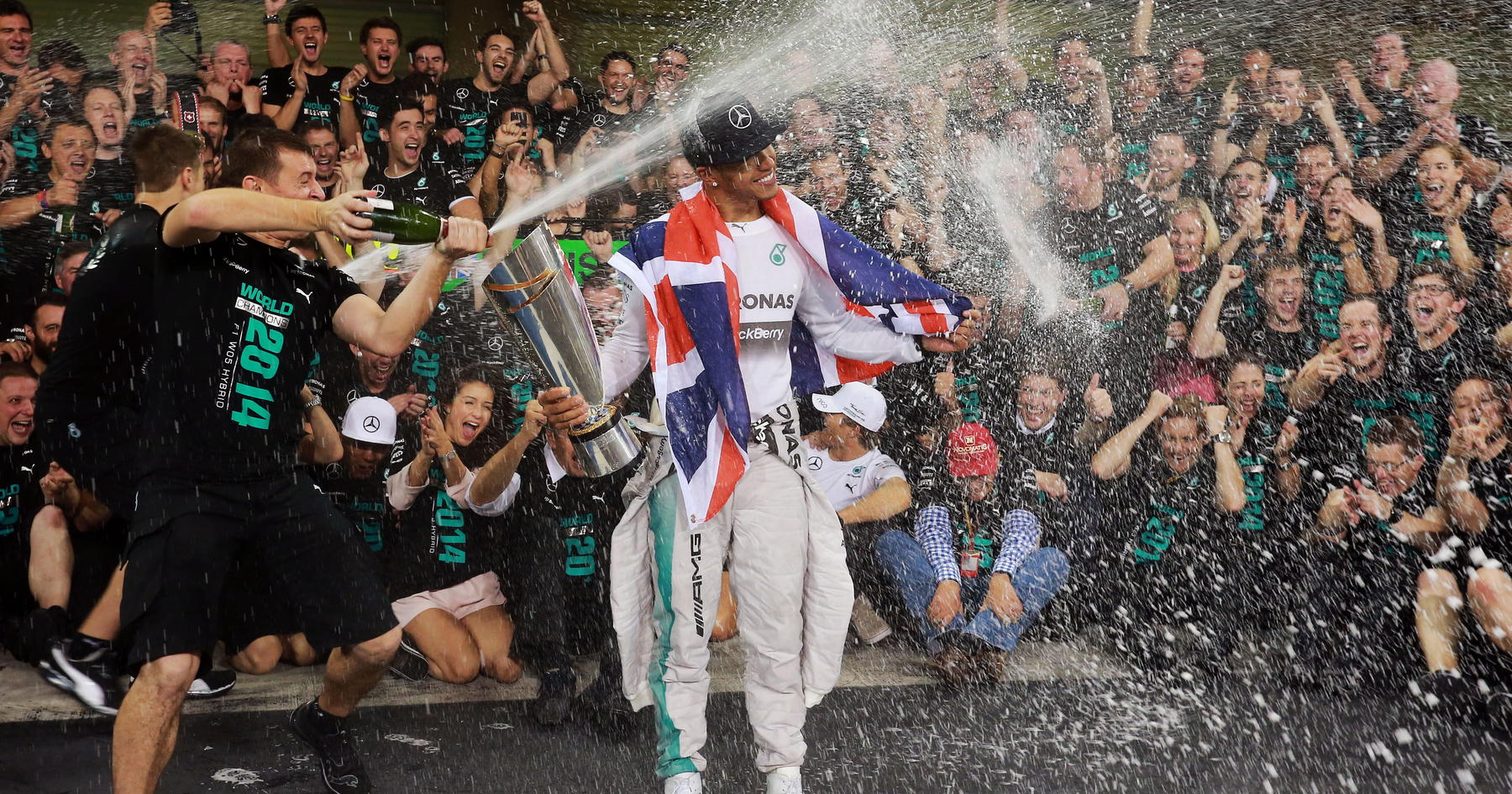
12 years in the past as we speak, Lewis Hamilton received the 2014 Abu Dhabi Grand Prix at Yas Marina Circuit to clinch his second System 1 world championship, beating Mercedes team-mate Nico Rosberg to the title in a season finale that carried double factors.
Hamilton began second on the grid behind Rosberg, who had taken pole with a lap of 1m40.480 to the Briton’s 1m40.866.
However the race swung decisively in Hamilton’s favour on lap 24, when Rosberg’s automobile suffered an power restoration system failure that induced a extreme lack of energy.
The malfunction additionally compromised the rear braking efficiency on Rosberg’s Mercedes, sending him tumbling from second place all the way in which right down to 14th on the end.
Hamilton managed the race from there, crossing the road to take his eleventh win of the marketing campaign. Felipe Massa completed second for Williams, with team-mate Valtteri Bottas finishing the rostrum in third.
Daniel Ricciardo took fourth for Crimson Bull and set the quickest lap, whereas Jenson Button rounded out the highest 5 for McLaren.
The controversial double factors system
As a result of 2014’s finale carried double factors, a rule the FIA and F1’s Technique Group had launched to maintain the title battle alive till the final spherical, Hamilton’s win was value 50 factors slightly than the same old 25.
It secured the championship together with his tally of 384 factors ending nicely away from Rosberg’s 317, with Ricciardo third on 238.
The format had been deeply unpopular earlier than a wheel had even turned. Sebastian Vettel had condemned the thought as absurd when it was first introduced, arguing it devalued a season’s work, as reported by Sport Bild.
Toto Wolff had likewise admitted to Sky Sports activities F1 that he feared a man-made swing may overshadow the end result of the title.
Because it occurred, Hamilton topped the standings with or with out the weighting, which means the double factors made no distinction to the vacation spot of the trophy. That did nothing to quiet the backlash.
Groups had agreed to the system by the Technique Group and F1 Fee in late 2013, however regret set in shortly, and the FIA World Motor Sport Council scrapped the rule fully forward of the next season, restoring F1 to a single factors system that has remained ever since.
