

Weight discount has been one of the crucial consequential technical battles of the 2026 Method 1 season.
The mix of elevated electrical energy output and a regulatory drop in minimal weight, from 798kg in 2025 to the present 768kg, has introduced each staff on the grid with a genuinely complicated engineering downside.
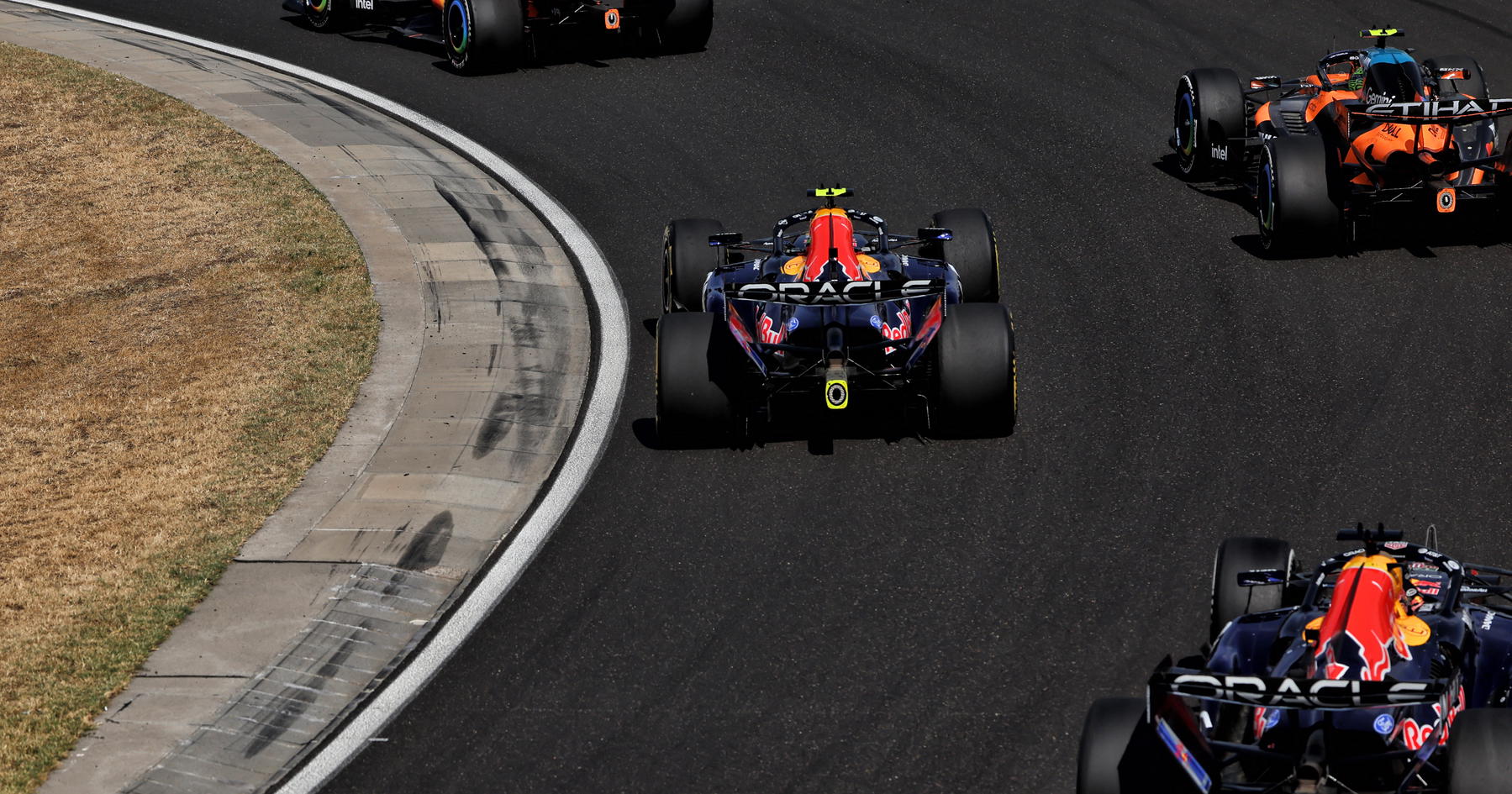
By the point the season opener arrived, just about no automobile on the grid was operating on the minimal weight restrict. McLaren was maybe the closest of anybody, and that proximity was no accident. It was the direct results of a deliberate design philosophy centred on a notably quick wheelbase.
The 2026 laws cap the utmost wheelbase at 3,400mm, down from 3,600mm the earlier season. McLaren went additional nonetheless, constructing the MCL40 round a wheelbase of roughly 3,250mm, roughly 150mm shorter than the typical amongst its rivals.
Shortening the wheelbase is among the only technique of decreasing general automobile weight. A extra compact chassis requires much less materials all through, making it maybe probably the most direct path to hitting the load goal.
Nonetheless, as McLaren demonstrated in the course of the opening section of the season, that effectivity comes with actual drawbacks.
The MCL40 proved tough to stability within the early rounds, and generated much less downforce than its opponents. The reason being simple: shorter aerodynamic surfaces, each above and crucially beneath the automobile, imply much less space over which to construct aerodynamic load.
A shorter automobile is lighter however aerodynamically extra constrained, and discovering efficiency features in the course of the growth section with out upsetting that stability has confirmed to be an evident limitation of the strategy.
The extra widespread route: structural refinement
For many groups, the extra sensible and sustainable path to weight discount runs by way of the incremental refinement of structural parts.
By redesigning particular person components with better precision, engineers can cut back their quantity while sustaining the identical structural integrity, shaving grams throughout dozens of parts concurrently.
Traditionally, magnesium was broadly used for mechanical parts exactly due to its low density. It was finally banned attributable to its flammability, closing off that exact avenue totally.
Right now, the main target falls on extra correct design of each mechanical parts, similar to uprights and hubs, and composite components. That is probably the most broadly adopted and dependable methodology accessible to present engineering departments.
It’s price emphasising, nevertheless, that redesigning parts with the particular intent of decreasing unsprung mass is way from a fast course of.
Every half should undergo an in depth validation programme to make sure it meets the identical requirements of reliability and structural resistance because the model it replaces. Chopping weight on this space calls for persistence.
Among the many groups which have most clearly pursued a scientific weight-reduction technique all through the season, Purple Bull stands out.
The aerodynamic developments launched on the RB22 haven’t been aimed solely at bettering outright downforce or airflow effectivity; weight saving has been a parallel goal, and the general impact has been a gradual enchancment within the automobile’s power-to-weight ratio.
The importance of that metric is nicely established throughout the paddock. Lowering a automobile’s weight by ten kilograms interprets to a lap time enchancment within the area of three to 4 tenths of a second, relying on the circuit traits.
That alone makes the painstaking work of part refinement totally worthwhile for each staff nonetheless chasing these last kilograms.
